The Headline Is Not a Summary: A Common Reading Mistake
Compare a news headline with the article’s central claim to see how word choice and emphasis shape your first impression before you share the story.

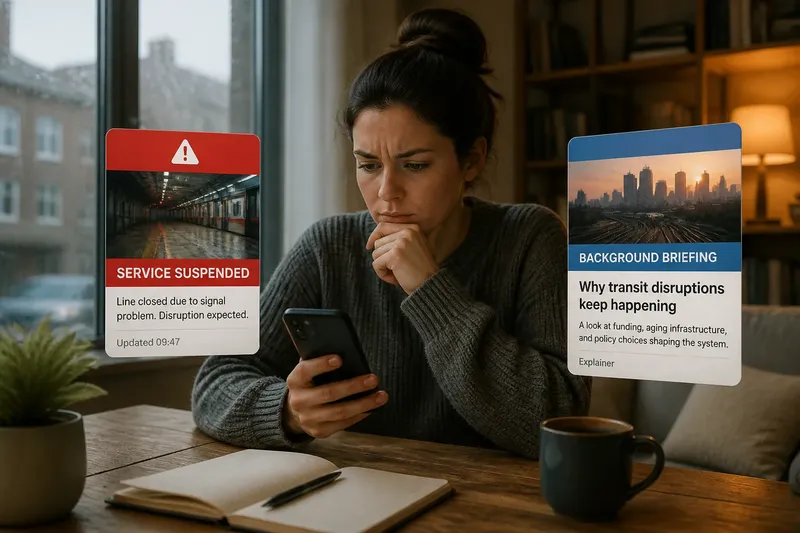
You glance at a news alert while the kettle warms. Its headline gives you a culprit, a consequence, and a reason to keep reading, all before the water boils. A news headline is not a summary: it is an editorial choice about which part of a report gets the first look.
That choice matters because readers often meet stories in fragments: a notification, a search result, a social post. The useful question is not simply whether a headline is accurate. It is how its wording directs attention, and whether the article’s structure supports that emphasis.
What does the headline put in the foreground?
Notice the headline’s subject, its strongest verb, and the detail it places first. “Mayor faces criticism over plan” centers conflict; “Plan would change parking rules” centers the proposed change. The article may cover both, but the headline tells you which one to notice before anything else.
Look, too, at what kind of language carries the weight. A vivid verb can make a routine action sound dramatic; a question can put a possibility in your mind without answering it. These are framing choices, not automatic evidence of an inaccurate report.
Before opening the story, paraphrase the impression in plain language. Keep the paraphrase brief: “The headline makes the dispute seem like the main event.” That gives you a point of comparison without turning the headline into a verdict.
How does the article organize attention?
Read beyond the first paragraph and notice where the story spends its space. Does it lead with a scene, a decision, a public reaction, or background? Which people or institutions get quoted, and whose perspective appears later or not at all?
Those choices reveal the article’s frame: the angle that organizes the material. A story about a school policy might be framed around administrators’ rationale, families’ concerns, or the practical effects on students. Each angle can use the same underlying events while directing readers toward different questions.
Pay attention to placement, not just inclusion. A response mentioned near the end is technically present, but a reader who stops early may never see it. Likewise, a vivid anecdote can dominate the reading experience even when the story later gives broader context.
Where do headline and story direct attention differently?
Compare the headline with the article’s structure using three questions: Who is centered? What consequence or conflict gets the most attention? What context appears prominently, and what is left for later?
A headline may foreground a sharp exchange while the story devotes most of its reporting to the policy behind it. Or it may emphasize a personal account, with the wider issue introduced several paragraphs later. The difference is worth noticing even when both elements are consistent with the story.
Do not demand that a headline carry every detail. Its job is to be selective. The better test is whether that selection gives a fair first impression of the article’s main angle, or makes a secondary element seem like the whole story.
What should readers look for in headline framing?
How can I tell what a headline emphasizes?
Identify its main subject, action, and most vivid phrase, then ask what those choices make you notice first. Compare that impression with the people, events, and issues that receive the most attention in the article.
Can two accurate headlines frame the same story differently?
Yes. One might highlight a decision, while another emphasizes the reaction to it. The difference is a matter of editorial focus, and it can change which part of the story readers consider most important.
Why do headlines use questions or dramatic verbs?
A question can make an unresolved issue feel immediate, while a forceful verb can give an event a sharper emotional edge. Read the story to see whether that emphasis matches the reporting’s broader treatment.
What if I only see a headline?
Describe it as a headline, not as the full account. You can say what its wording emphasizes, while leaving the article’s angle and context unassumed until you read them.
How can a simple comparison change your reading?
Say you encounter an invented headline: “Parents revolt over school schedule.” You open the article and find that it spends its first paragraphs on a new timetable, includes comments from a few concerned parents, and later explains that other families support the change. Your first impression was a broad uprising; after reading, you would describe the article as a report on a schedule change with mixed family responses. The observable difference is not a new verdict about the policy, but a more accurate account of what the story chose to foreground and what it included later.
When a headline leaves you with a strong emotional impression, scroll through the article’s subheadings and closing paragraphs. Then return to the opening. This small loop helps reveal whether the story broadens its frame, stays with one angle, or introduces a competing perspective late.
Which checks help before you pass a story along?
- Headline subject: Check who or what appears first; if the headline centers a person but the article centers a policy, then describe the policy as the story’s main focus rather than repeating the person-centered framing.
- Strongest verb: Check whether a dramatic verb matches the article’s overall tone; if the verb makes a limited exchange sound like a major confrontation, then use a more neutral description, or retain the wording while noting the story’s narrower focus.
- Opening paragraphs: Check whether the lead establishes the same angle as the headline; if it shifts to another issue, then read further before sharing, or say that the headline and opening emphasize different things.
- Placement of context: Check where background or responses appear; if important context comes later, then read through that section before describing the article, or make clear that you have only read the opening.
- Sources and voices: Check whose views are quoted early and whose appear later; if one perspective dominates the opening, then avoid treating it as the article’s only perspective, or describe that imbalance plainly.
- Subheadings and ending: Check whether they broaden or reinforce the opening frame; if the ending adds a different angle, then include it in your description, or acknowledge that the article’s emphasis changes as it proceeds.
These checks are not a demand to inspect every sentence. They help catch the difference between a story’s subject and its framing—the angle that guides a reader through that subject.
What is the useful habit for the next alert?
When you see a headline, first notice the angle it offers. After reading, ask whether the article gives that angle the same weight, or places it alongside other concerns. This is a more useful question than asking whether a headline is simply good or bad.
For headline framing, the practical benefit is a sharper description of what you actually read: not just the event named in the headline, but the perspective the story brings forward. When you have seen only the alert, say so. A small boundary around your account can keep a strong first impression from posing as the whole story.